Reviewed by GIA graduate gemologists

Diamond Color

Diamond color is graded D to Z. Most differences are invisible outside a lab - which is exactly where you save.
Money-back
guarantee
GIA certified
diamonds
#1 on
Trustpilot
Free insured
shipping
Shop all rings

Engagement rings

Tennis bracelets

Tennis bracelets

Earrings

Earrings

Eternity bands

Eternity bands

Wedding rings

Wedding rings

Lab diamonds

Lab diamonds

Necklaces

Necklaces

Men's bands

Men's bands

1 carat diamonds

1 carat diamonds

Oval diamonds

Oval diamonds

Three stone

Three stone

Pavé

Pavé

Solitaire

Solitaire

Hidden Halo

Hidden Halo

Hoops

Hoops

Stackable rings

Stackable rings

Christian Siriano

Christian Siriano

Plain jewelry

Plain jewelry

Personalized jewelry

Personalized jewelry

Pearl jewelry

Pearl jewelry

Silver jewelry

Silver jewelry

What’s inside this guide

  • 01.
    What is diamond color?
  • 02.
    The D–Z scale
  • 03.
    Color and metal pairing
  • 04.
    Where to save
  • 05.
    FAQs
01.Definition

You’re grading the absence of color

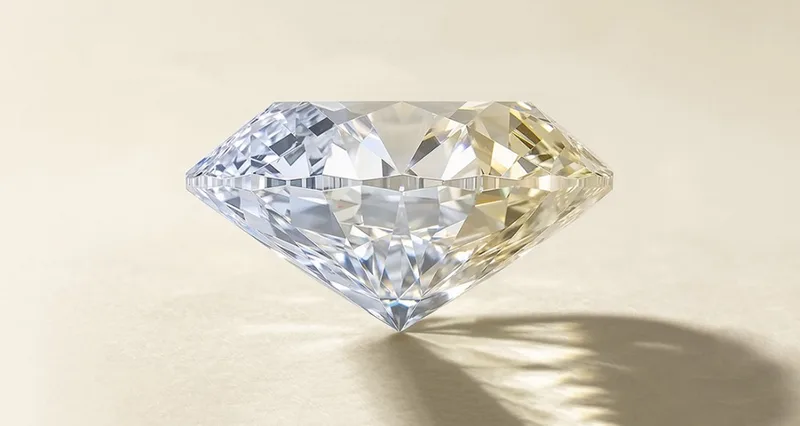
A perfectly “colorless” diamond, as clear as water, is rare. Most diamonds - lab-grown and natural alike - carry the faintest yellow or brown tint, picked up from trace elements such as nitrogen as the crystal forms. In a lab-grown diamond that happens over a few weeks in a controlled chamber; in a natural diamond, over billions of years deep in the Earth.
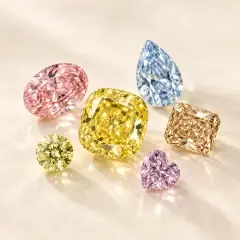
The GIA grades that tint from D (absolutely colorless) all the way to Z (visibly light yellow or brown). Anything past Z falls into the “fancy color” category, where color becomes a feature rather than a flaw.
Here’s the trick: differences between adjacent grades are incredibly subtle. Trained gemologists with master comparison stones and perfect lab lighting are sometimes unable to tell one grade from the next.
From colorless to warm
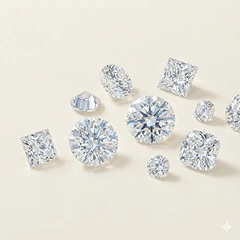
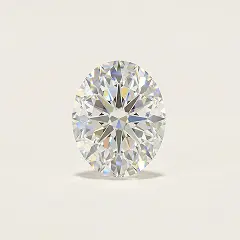
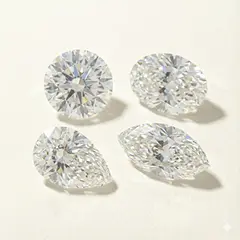
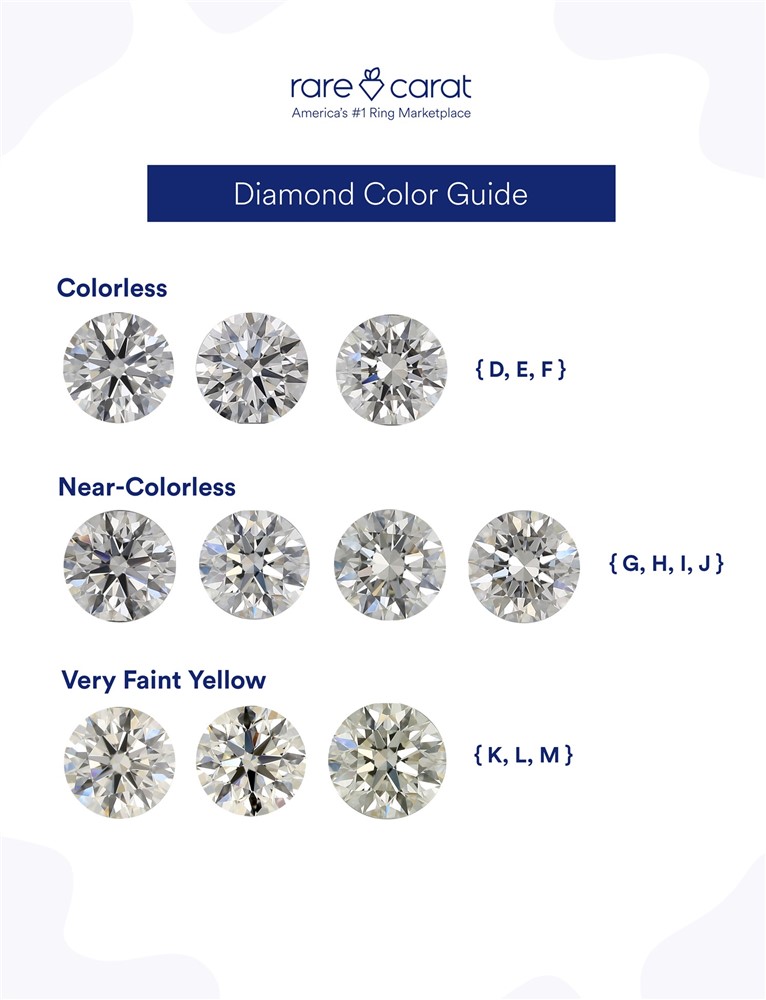
Diamond color guide showing colorless, near-colorless, and very faint yellow grade groups
Or jump straight into diamond search
02.Scale

The D-to-Z scale groups

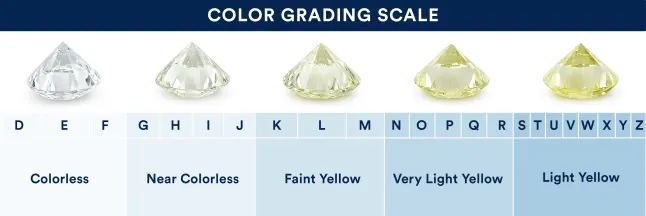
The 23-letter scale can be understood in four buckets:
Colorless (D–F): The rarest and most expensive grades. Pure ice-white, virtually indistinguishable from each other.
Near-colorless (G–J): Warmth so faint differences aren’t visible in every day settings, only in side-by-side lab comparisons.
Faint (K–M): Noticeable warmth, especially in larger stones. Pairs beautifully with yellow or rose gold.
Very light to light (N–Z): The tint becomes obvious in the face-up view. Most retailers - Rare Carat included - don’t stock these diamonds.
Diamond color grading scale from D to Z
03.Metal

Metal can hide or highlight colors

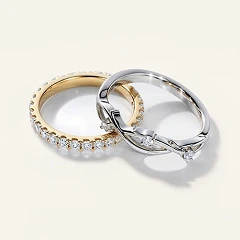
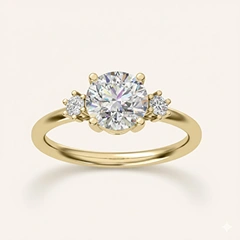
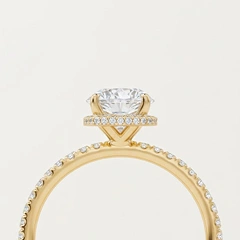
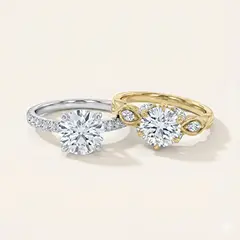
Yellow gold: a warm metal forgives a warm stone. A J-color diamond set in 14K yellow gold looks every bit as white as an F-color in platinum.
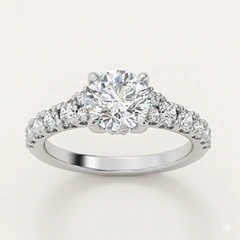
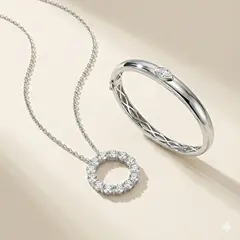
Platinum & white gold: these white metals reflect color back into the diamond. They show off colorless grades best - but they also expose warmth, so we recommend pairing a G or higher diamond with these metals.
Rose gold: the pinkish hue blends with any faint warmth in the stone. J and K grades pair beautifully and stretch your budget further.

RARE CARAT PRO TIP

For round and brilliant shapes, G or H is the sweet spot - they look colorless face-up and cost 15–25% less than D or E. For step cuts (emerald, asscher), bump up to F or G; their flat facets show more warmth.
Metal × color
Yellow gold
I–K saves
Platinum
D–G shines
Rose gold
J–K blends
A warm metal forgives a warm stone. White metals expose every degree of tint.
See every metal we offer
04.Value

How you can save money on color grades

Color is the easiest of the 4Cs to save on: the price gap between grades is real, while the visual difference in a finished ring is very small.
White gold and platinum: G or H is the sweet spot. These grades look colorless against a white metal and typically cost 15–25% less than a D or E of the same carat, shape, and clarity.
Yellow or rose gold: J or K is plenty. A warm metal absorbs the faint warmth in the stone, so a lower grade looks just as white on the hand - and frees up budget for carat or cut.
Two other factors nudge the grade you need: carat and shape. The larger the diamond, the more visible any tint becomes - step up one color grade for every full carat past 1.5ct. Large fancy shapes show a little more color near the tips, so bump up one grade there as well.
Match grade to metal
Best value
White gold & platinum
Look for G–H
15–25%vs. D–F
Yellow & rose gold
Look for J–K
Greatersavings
Pair the color grade to your band metal: a warmer metal masks a lower grade, so you reach the same white look for less.
Or compare across grades
05. FAQS

Frequently Asked
Questions

Ready to pick a color?

You've learned what every color grade actually looks like in a ring. Let our AI surface the best-value diamonds at your preferred color.